The Parameters of the True Religion
Completing the book "What is Islam"
3/21/20264 min read
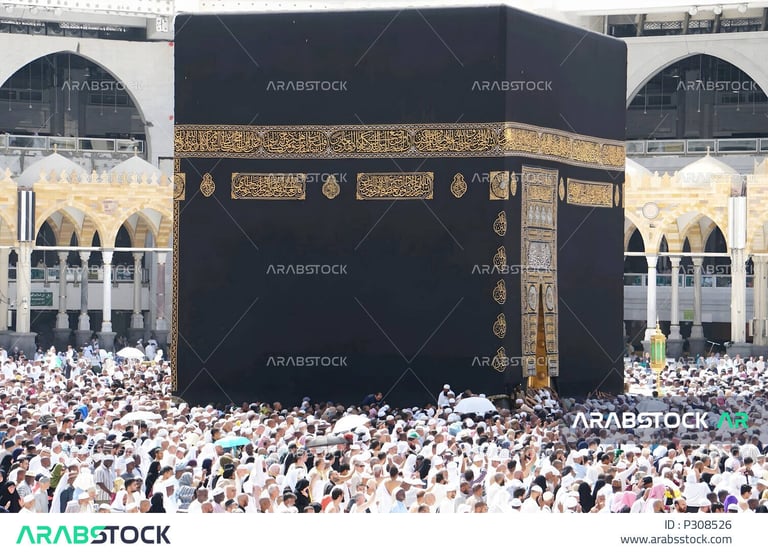
The Parameters of the True Religion .
Mere reflection on the history of humans demonstrates that
humans have a desire to have religion. Yet there are many religions
and each is presenting itself as the “true religion” that will bring
solace to the individual. Thus, in this section, the author would like
to present what he feels are the four parameters by which one may
distinguish the true religion.
The first parameter is that the religion must have God as its
original source. No one can know the details about God except God.
He i s above and beyond the realm of human experience. More
importantly, no one knows how He should be worshipped except
Him. Although humans are able to come to many sound conclusions
about God, no human could logically claim that he has somehow—
independent of revelation from God—discovered the way in which
God should be worshipped and the way that is pleasing to God. Thus,
if the ultimate goal in one’s heart is to truly please and worship God
as He should be worshipped, then one has no alternative but to turn to
Him for guidance and direction. (Furthermore, no one can know the
details of the human soul except for its Creator.)
Thus, based on this first premise, any m an-made religion is
not a logical alternative. No matter how hard humans may try, they
cannot authoritatively s peak about how God i s supposed to be
worshipped.
As a corollary to or further explanation of this parameter, the
beliefs and the teachings of the religion must originate with God.
This parameter does not mean that one time God played a role in the
formation of the religion. No, this parameter means that the entire
scope of the religious teachings come from God. There are some
religions that may have originated from God but, afterwards, their
adherents felt free to rely upon human reasoning to adjust, modify or
alter the religion. In the process, they have actually created a new
religion, different from that which God had revealed. This, once
again, completely defeats the purpose. What God revealed does not
need any improvement or changes from humankind.
change or alteration means a deviation away from what God revealed.
Thus, any change or alteration will only take humankind away from
the true and proper way of worshipping God. Furthermore, God is
more than capable of revealing a perfect revelation for any time or
circumstance. If there were any need to alter or change any of God’s
laws, the authority for that also rests only with God. In other words,
God is free to change some of His laws due to His wisdom and
knowledge, for example, out of mercy or as a form of punishment
upon His servants. He may do this by sending a new revelation or
even by sending a new prophet. With that, there is no logical
problem. But there is a g rave problem when humans take it upon
themselves to “fix” God’s revelation.
The violation of this first parameter has been a common
practice. It seems that humans want to relegate to themselves
ultimate authority. However, it must be understood that this
contradicts the very essence of submitting to and worshipping God.
One is no longer submitting to and obeying God alone. One is now
submitting to God, human leaders and perhaps even one’s own
opinions as well. This is the antithesis of pure and devoted worship of
God.
Thus, the first parameter states that the religion originates
with God. However, this is not sufficient. The second parameter is
that the teachings from God must be preserved in their original form.
The logic behind this point should be obvious. If the original
revelation came from God but was then later tampered and distorted
by humans, one now has a mixture of God’s religion and human
interpolation. This is no longer God’s pure religion. Although this
may seem like an obvious premise, it is amazing to see many people
who have not even considered this point, blindly following scriptures
or teachings that cannot be historically authenticated.
The third parameter is that the religion is not abrogated or
superseded by a later form of the religion. In other words, God may
reveal more than one revelation or send more than one prophet, with
the latter repealing or superseding the earlier.
circumstances, if one is truly submitting to God, one does not have
the right to choose to follow an abrogated teaching and neglect the
teaching that God is now demanding to be followed. Again, this
would violate the principle of submitting to God and would arrogate
to the individual the right to choose what he willed to follow instead
of what Allah has decreed.
The above three parameters are straightforward and obvious.
In this author’s opinion, though, there is also a fourth parameter. The
fourth parameter is that the basic beliefs of the religion have to be
something fathomable by humans and not repugnant to human
nature. It is inconceivable that the same God who created such order
and gave humans the ability to understand and derive lessons from
what is around them would then ask of them to believe in matters that
are completely unfathomable to them and inconsistent with what the
soul can accept as truth.
See you in the next blog to complete the book.
Sources :-
A book for calling people to Islam in English is the book .
"What is Islam?" by Jamaal Zarabozo .
A piece of advice and an invitation from a well-wisher for you .
I invite you, my dear brother, to Islam and to believe in God Almighty. He alone is worthy of worship. The purpose of our creation is to worship God alone, without any partners.